Sagehen is working hard to scale up the kind of forest treatments needed to return low intensity fire and restore health and resilience to our precious central Sierra forests.
But we can't move forward--and could never have gotten anywhere in the first place--without a broad and increasing range of excellent partners. We need a fundamental shift in our cultural relationship to fire and forestry, and to get there will involve 5 prongs: Art, Business, Policy, Management, and Science. In particular, art is how you change culture, so we need an artistic response at the scale of the management response.
Joining with the Nevada County Arts Council, Arts & Culture Eldorado, the Nevada Museum of Art - Center for Art + Environment and many socially-engaged artists and other supporters, we have initiated an effort called Future Forests. See the website to learn more about us, see what's already happening, and to get involved if our work meshes with yours. We always need more partners!
Listen to Jeff describe the pieces of the puzzle on WeatherBrains 724 (watch from 38:05-44:09):
This is an excellent background piece from the NYT. It cuts through the fantasy spin of the timber industry and the extremist environmentalist wing, stating what the majority of loggers and environmentalists already agree on.
The piece cites the true leading experts in California fire history and forest ecology: Malcolm North, Stephen Pyne, Scott Stephens, Greg Asner, the Little Hoover Commission.
As Paul says in the video, Native Americans managed the landscape with fire for thousands of years--in fact, the forests wouldn't exist without this legacy of fire.
Native American Forest Management
In California
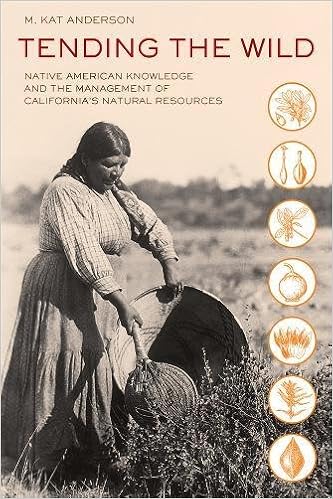
Kat Anderson's, Tending The Wild is the definitive text on Native American land management in California.
"Like people everywhere, Indians survived by cleverly exploiting their environment. Europeans tended to manage land by breaking it into fragments for farmers and herders. Indians often worked on such a grand scale that the scope of their ambition can be hard to grasp. They created small plots, as Europeans did...but they also reshaped entire landscapes to suit their purposes. A principal tool was fire, used to keep down underbrush and create the open, grassy conditions favorable for game. Rather than domesticating animals for meat, Indians retooled whole ecosystems to grow bumper crops of elk, deer, and bison."
..."what the eco-imagery would like to picture as a pristine, untouched Urwelt [primeval world] in fact has been managed by people for millennia...[forests] are among the finest works of art on the planet." "The Indians were the 'keystone species' of the American ecosystem...After disease killed off the Indians...buffalo vastly extended their range. Their numbers more than sextupled. The same occurred with elk and mule deer."
When
Europeans arrived in the Americas, they caused so much death and
disease that it changed the global climate, a new study finds.
European settlers killed 56 million indigenous people
over about 100 years in South, Central and North America, causing large
swaths of farmland to be abandoned and reforested, researchers at
University College London, or UCL, estimate. The increase in trees and
vegetation across an area the size of France resulted in a massive
decrease in carbon dioxide (CO2) in the atmosphere, according to the
study.
Carbon levels changed enough to cool the Earth by 1610, researchers found. Columbus arrived in 1492. "CO2
and climate had been relatively stable until this point," said UCL
Geography Professor Mark Maslin, one of the study's co-authors. "So,
this is the first major change we see in the Earth's greenhouse gases."
Before
this study, some scientists had argued the temperature change in the
1600s, called the Little Ice Age, was caused only by natural forces.
But
by combining archaeological evidence, historical data and analysis of
carbon found in Antarctic ice, the UCL researchers showed how the
reforestation -- directly caused by the Europeans' arrival -- was a key
component of the global chill, they said.
"For
once, we've been able to balance all the boxes and realize that the
only way the Little Ice Age was so intense is ... because of the
genocide of millions of people," Maslin told CNN.
The Sagehen Forest Project is growing. The techniques and strategies we developed are being applied at larger scales in California. We are involved in several new initiatives, profiled in previous posts: Lake Tahoe West, Tahoe Central Sierra Initiative, Living Forests.
We continue our outreach efforts. In September, Sagehen hosted 35 insurance industry executives to talk about what they should know about forest management, and how they can help. We are planning our next state and federal legislative training session for 2018. This fall we attended Burning Man as a guest of one of the founders in order to explore how Black Rock City's unconventional thinkers can help. We are meeting with this year's Temple architect and other artists about dead trees, forest health, and how their projects can connect people to forest issues.
Full implementation will take up to 3 more years to get burn windows, but you may want to start following some or all of these other efforts.
Saving The West (now Living Forests) continues to move forward with its goal of creating a small wood industry to restore ecological function to western forests. Some recent developments include:
The Center for the Study of the Force Majeure was recruited this fall to submit a $100-million STW grant proposal to the MacArthur Foundation's 100&Change program. The proposal passed administrative review, and the foundation will announce semi-finalists in mid-January. Newton Harrison is also in conversation with the Buckminster Fuller Institute about STW; in 2014, the organization awarded a Fuller Challenge honorable mention to the Harrison's art project at Sagehen.
We are applying for grants to fund a LiDAR and Landsat analysis to determine the quantity and quality of woody material that would be removed should the STW demonstration area in central CA and western NV be treated to restore ecological function. This analysis applies the "8-Emphasis-Area" approach developed in the Sagehen Forest Project collaboration. Quantifying the available supply over the time spans required for investment capital repayment is traditionally the major stumbling block to moving forward with new markets. Due to the realities of implementation cost, the Forest Service currently designs projects around what they can sell on the current commodities market, which is not useful for making financial projections.
The Sagehen Forest Project model is now being implemented in the Lake Tahoe West Shore collaborative project, a big scaling up of the concepts.
We continue meeting with all kinds of people already working at the intersection of industry and forest management in CA and NV, creating synergies and opportunities. One interesting idea we are discussing with the Burning Man people is the use of Sagehen Project slash for the construction of structures like the Man or the Temple, as a way to spread these concepts to a global audience.
Meeting in the field on June 30, 2016 to view the current forestry work, 34 attendees representing 18 different organizations visited Sagehen to check in on the Sagehen Forest Project implementation. The group included the contractor, project funders, and members of the collaborative design process, as well as organizations and individuals involved in the upcoming Lake Tahoe west shore collaborative project:
UC Berkeley, Sagehen Creek Field Station
Truckee Ranger District, Tahoe NF, USFS
Tahoe National Forest
National Forest Foundation (NFF)
Sierra Nevada Conservancy, CA (SNC)
Wildife Conservation Board, CA (WCB)
Sierra Business Council (SBC)
Truckee Fire
Cal Fire
South Yuba River Citizens League (SYRCL)
Lake Tahoe Conservancy, CA (CTC)
Tahoe Regional Planning Agency (TRPA)
California State Parks
Lake Tahoe Basin Management Unit, USFS
Private citizens
West Forest Inc.
Pacific Southwest Research Station, USFS
USFS Region 5
While mastication is certainly traumatic, everyone seemed pleased with the overall results so far, and eager to see fire on the ground. KGO-TV--the San Francisco Bay ABC affiliate--sent a reporter, and I'll post that piece when it is released.
Adrian Harpold, Ph.D., Nevada Mountain Ecohydrology Group, University of Nevada, Reno prepared this one-sheet to explain his work at Sagehen, titled "More Water and Healthy Forests? Improved Forest Management By Integrating LiDAR Remote
Sensing and Hyper-Resolution Models".
The Sagehen Forest Project has spun off several remarkable related projects.
Saving The West (STW), now Living Forests, is a policy document developed by the Center for the Study of the Force Majeure at UC Santa Cruz, including artist Newton Harrison and consultant Josh Harrison. STW is being developed as a rallying point to bring together a group of folks interested in addressing the glaring hole in the Sagehen Forest Project: the lack of a California market for raw wood product.
Going into the collaborative process, we all thought that getting environmentalists and loggers to agree would be the hard part. But, given a little time, that turned out to be relatively easy: everyone benefits from a healthy forest. Yet, now that we all agree on what needs to be done, we are stymied by the lack of someone to buy even the saw logs coming off the forest, much less the wood chip and small diameter wood. For the unit treatments around the station which are being funded by the National Forest Foundation (NFF) grant, we are just masticating everything into chip that will be burned on the ground. Or chopping and stacking logs into burn piles. This seems so wasteful: that material should be used, and continue to act as carbon storage.
The Center is working to put forestry issues onto the platform of the Democratic presidential nominee, as well as into the Governor's office. If these politicians start to hear about this need from both the scientists and the artists, it carries more weight and importance.
We have begun to bring Cathexis Architecture into the conversation. Cathexis has an impressive redevelopment project planned for a sizable chunk of downton Reno, NV, and they would like to build at least one wooden skyscraper. Binderholz, an Austrian company that manufactures engineered wood products, is planning to open a plant in the US. They are looking in the Pacific Northwest, but the NFF is reaching out to try to connect them with the Reno Dept. of Economic Development. If we could develop a market for wood product here, that reduces transportation costs to get material out of the forest.
There is lots of good information about the Sagehen Forest Project on this blog. But it can be tricky to find a succinct explanation, so I've written a synopsis (below). Printable version here.
Be sure to see the Purpose and Needs statement for a more complete and detailed discussion of the project genesis.
================
The Sagehen Forest Project
The northern Sierra Nevada was largely denuded of timber during the Comstock silver strike in Virginia City, the construction of the transcontinental railroad, and the post WWII construction boom. The forest that re-grew was optimized for timber harvest, and now shows limited diversity of tree species, size and age class, as well as a massive accumulation of fuel due to a century of aggressive fire suppression.
Dense "dog-hair" stand of Lodgpole pine.
These stands choke off resources for large
trees and constitute a big fire danger.
This is not a healthy structure for a forest nor for the things that live in the forest: large fuel loads along with high susceptibility to drought, insect infestation and disease result in devastatingly hot and destructive wild fires and declining wildlife habitat quality. Unfortunately, much of the forested western US suffers from the same conditions. Due to a warming, drying climate since their establishment after the last ice age, forests cannot always recover or reestablish after these disruptive events.
At this point in time, the forests need active manipulation to return them to a more natural, resilient, fire-tolerant structure, but this is too expensive to do everywhere. A strategy for treating a smaller portion of the forest that yields similar benefits was proposed and adopted by the Forest Service in the early 2000’s. The strategy was called SPLATs, Strategically Placed Land Area Treatments. The idea involves thinning and removing fuel from roughly 30% of forested areas in a waffle-like pattern. This approach shifts the choice of treatment zones from smaller, more targeted and logistically or politically motivated areas, to a broader “landscape” management perspective.
A large, ecologically-valuable Jeffrey pine, released by
thinning treatment at Sagehen.
But SPLATs had never been tested on a real forest, nor in areas with topographic relief. In partnership with the Forest Service, Berkeley professors Scott Stephens and John Battles decided to implement the strategy at Sagehen. They funded a Ph.D. student and a massive data collection effort. Creating what is one of the best data sets of its kind, the study sampled the entire basin for vegetation and fuels, including a grid of permanent 500-m2 plots where every tree is tagged and measured, canopy closure determined, and ground fuels classified. LiDAR laser mapping created high-resolution topographic maps at 1-m resolution, for both vegetated and bare-earth surfaces. A rare eastern Sierra fire history dating back to the 1600’s was drawn from live trees and Comstock-era stumps.
Existing remote sensing and fire models were enhanced with this data and new predictive tools created. In this process, it became obvious that while these treatments would definitely disrupt fire behavior, their implementation would potentially impact wildlife, water quality and other forest products. To fill in the missing pieces, the Forest Service’s Pacific Southwest Research Station (PSW) put together an interdisciplinary team to come up with a guiding document: a science synthesis on the broader natural ecology of Sierra east-slope pine forests. The result, General Technical Report (GTR) 220, provided a big picture view of the issue and how to structure forests that are not just fire-resistant, but also topographically diverse, wildlife friendly and responsive to today’s--and tomorrow’s--altered climate conditions.
With this tool in hand, Sagehen worked with the Forest Service to create a collaborative process to decide what to do in the basin forest, where, and how to do it. We invited everyone who might be interested: loggers, environmentalists, agency staff, academics, NGOs, interested citizens. And they came. We hired a facilitator. We created a public outreach blog and posted every document the group created. We treated two demo plots so everyone could see the ideas on the ground rather than just in the abstract. The group spent the last year and a half hammering out a solution that everyone could live with.
And, amazingly, everyone was able to agree. The project was approved without litigation at any stage. Official letters of support came from both the loggers and the environmentalists.
Additionally, the National Forest Foundation has jumped on board, adopting the Truckee River watershed for their “Treasured Landscapes” initiative, and promoting the Sagehen Forest Project as the best way to address forest restoration efforts in the area.
This project potentially offers other forests a way around the logjam of litigation and contentiousness that has shut down many timber management projects proposed on public lands in the western US in recent years. As such, the Lake Tahoe Basin Management Unit has adopted the strategy and worked hard to shift their employees toward this new paradigm. Their public collaboration began in fall 2016 and includes Sagehen. A large forest management project at the Truckee-Airport Board’s Waddle Ranch is also modeled after the Sagehen Forest Project.
The Sagehen Forest Project is creating momentum to revisit past basin research and answer larger questions than this science originally addressed. In addition to resampling the vast forest structure inventory, and in anticipation of the coming changes to the landscape, hydrology and soils data collection expanded this year. And researchers actively re-sampled historic small mammal trapping transects, fish and bird surveys, and pine marten monitoring dating back to the 1960’s. Protected Activity Centers (PACs) set aside for species of concern like Northern Goshawks and California Spotted Owls are being watched carefully to see if the animals really do prefer the current conditions, or if they will move when different local habitat becomes available.
Everyone is happy. We thought we were done. We began implementing the prescription at Sagehen.
But it turns out that the timber industry in California is basically gone. There is very little mill capacity left and what there is, is now unavailable. As a culture, we made a huge misstep that seemed like a good idea at the time: we decided to give away the standing dead timber from catastrophic fire and beetle kill. This dead wood is now plugging up the available capacity: why buy green timber when you can get an unlimited supply of black timber for free? With no market for the wood coming out of the forest, there is no money to fund removing it.
Our culture has essentially decided to sacrifice the living in order to scavenge the dead. And it turns out that there is no valid reason to do this: ecosystem health values that standing dead, and once the needles fall off the beetle kill there is little fire danger left. In fact, removing just the logs from a forest (and leaving the brush, small trees, limbs, needles, bark, etc. as in traditional forestry) only reduces fire risk by 3 or 4%.
What we need now is a new timber industry, one that uses small diameter trees and slash to produce not just conventional timber, but new wood products like engineered timber, cross-laminated timber (CLT), oriented strand board (OSB), torrefied pellets, soil enhancements, bio-energy, and even hydrocarbon feedstock for plastics. A distributed forestry industry creates local jobs. Developing a viable small timber industry as a byproduct of forest health treatments has additional benefits, replacing steel, petroleum and concrete in multi-story structures that are more fire-resistant and seismic safe, while sinking massive amounts of carbon that will otherwise eventually burn up in the forest.
Jeff and I were just in Washington, DC with the Organization of Biological Field Stations (OBFS) to share information about field stations with Congressional staffers. One of the topics Jeff and I spent a lot of time discussing with our state reps is the Sagehen Forest Project.
One big issue is how project implementation is being held up by the lack of a market for our logs, since there is so much black timber from recent fires.
As a society, we are unintentionally sacrificing the living in order to scavenge the dead. Not good!
Scientific Illustrator Stephanie Rozzo recently produced graphic art demonstrating concepts behind the Sagehen Forest Project. Let us know if you would like copies of this poster or its components for project outreach.
We set up a number of designated PhotoPoints within the two demonstration plots to capture starting conditions, as well as changes over time moving forward.
As the Project Leads, Joanne Roubique and Peter Stine, reminded us at the 4/18/2011 stakeholder meeting, we are in the critical period for receiving input and feedback.
To help everyone with planning, below are the next set of important dates for the Sagehen Collaborative Project:
May 3, 2011, 9:00am – 12noon: FlamMap and FARSITE fire modeling, at Truckee Ranger District and via webinar.
May 6, 2011: Comments due on Draft Prescriptions.
June 1, 2011: Stakeholder Meeting: Review of Draft Proposed Action and Draft Purpose and Need, Truckee Ranger District.
June 8, 2011: Comments due on Draft Proposed Action and Draft Purpose and Need.
July 12, 2011: Stakeholder Meeting: Review of Proposed Action and Purpose and Need, Truckee Ranger District.
July 19, 2011: Comments due on Proposed Action and Purpose and Need.
Late July or early Aug: Tour of some the marked units, including American marten (i.e. emphasis areas 1, 2, 4); aspen (emphasis area 8); and stream/riparian areas, Sagehen Basin.
Approximately August 15, 2011: NEPA starts with publication of the Proposed Action.
Thank you for your continued interest and input to the Sagehen Collaborative Project.
-Review of Vegetation and Habitat (American marten) Data and Maps, goals and treatment approaches
-Review and discussion of FLAMAP FIRE MODELING
-Review and correction of ISSUES LIST (revised from the 3/4/2011 meeting)
Sagehen Collaborative Project
Stakeholder Meeting
April 18, 2011
10:00am – 3:00pm
Meeting Location:
USFS Truckee Ranger District office, front conference room
10811 Stockrest Springs Road
Truckee, CA 96161
Logistics:
The meeting will take place no matter the weather. Sun, rain or snow – the meeting will not be cancelled. The entire meeting will be held indoors at the Truckee Ranger District.
We will take a 30 minute break for lunch. Please be sure to bring your lunch. We are not able to provide lunch and there is not a convenient place to buy lunch.
Thank you again for your interest in the Sagehen Collaborative Project. We are looking forward to sharing a lot of data and information with you!