Yesterday, we effected our first Culture of Fire underburn! Learn more at the link, but here's a snippet:
Showing posts with label video. Show all posts
Showing posts with label video. Show all posts
Friday, February 21, 2020

Friday, December 6, 2019
WeatherBrains #724 podcast
Jeff talks about the wildfire issue on the popular WeatherBrains podcast this week:
More info and audio link on the website.
More info and audio link on the website.
Friday, October 19, 2018
Traditional Forest Management
TED talk on Forest Management
As Paul says in the video, Native Americans managed the landscape with fire for thousands of years--in fact, the forests wouldn't exist without this legacy of fire.
Native American Forest Management
In California
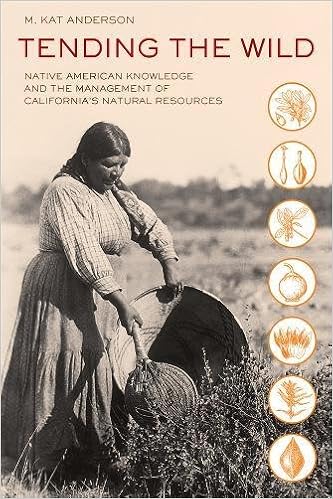 Kat Anderson's, Tending The Wild is the definitive text on Native American land management in California.
KCET: Cultural Burning, Episode 1
----------------------------------------
Menominee Forest Keepers

The Menominee practice a sustained-yield approach to forestry; that is, they manage the forest to ensure that trees are harvested in amounts that will ensure a steady supply of timber far into the future. The Menominee approach is unique, blending modern forestry science with traditional beliefs embedded deep in their culture."
More info.
------------------------------------------
Forests Are Human Artifacts
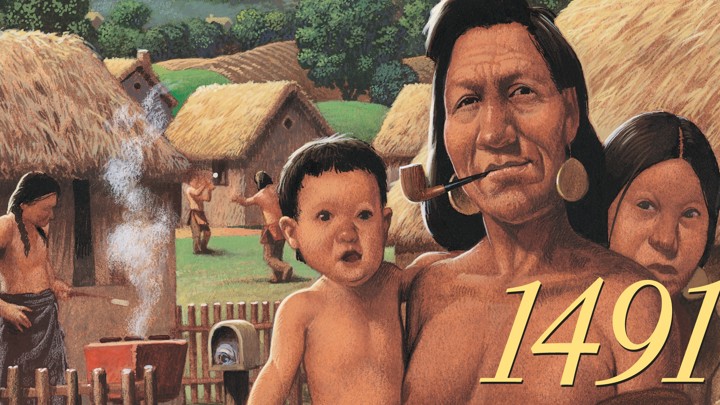
"Like people everywhere, Indians survived by cleverly exploiting their environment. Europeans tended to manage land by breaking it into fragments for farmers and herders. Indians often worked on such a grand scale that the scope of their ambition can be hard to grasp. They created small plots, as Europeans did...but they also reshaped entire landscapes to suit their purposes. A principal tool was fire, used to keep down underbrush and create the open, grassy conditions favorable for game. Rather than domesticating animals for meat, Indians retooled whole ecosystems to grow bumper crops of elk, deer, and bison."
..."what the eco-imagery would like to picture as a pristine, untouched Urwelt [primeval world] in fact has been managed by people for millennia...[forests] are among the finest works of art on the planet."
"The Indians were the 'keystone species' of the American ecosystem...After disease killed off the Indians...buffalo vastly extended their range. Their numbers more than sextupled. The same occurred with elk and mule deer."
-----------------------------------------
Collapse of Native American populations changed the global climate by allowing forests to expand
When Europeans arrived in the Americas, they caused so much death and disease that it changed the global climate, a new study finds.
European settlers killed 56 million indigenous people over about 100 years in South, Central and North America, causing large swaths of farmland to be abandoned and reforested, researchers at University College London, or UCL, estimate. The increase in trees and vegetation across an area the size of France resulted in a massive decrease in carbon dioxide (CO2) in the atmosphere, according to the study.
Carbon levels changed enough to cool the Earth by 1610, researchers found. Columbus arrived in 1492. "CO2 and climate had been relatively stable until this point," said UCL Geography Professor Mark Maslin, one of the study's co-authors. "So, this is the first major change we see in the Earth's greenhouse gases."
Before this study, some scientists had argued the temperature change in the 1600s, called the Little Ice Age, was caused only by natural forces.
But by combining archaeological evidence, historical data and analysis of carbon found in Antarctic ice, the UCL researchers showed how the reforestation -- directly caused by the Europeans' arrival -- was a key component of the global chill, they said."For once, we've been able to balance all the boxes and realize that the only way the Little Ice Age was so intense is ... because of the genocide of millions of people," Maslin told CNN.
---------------------------------------
"Fire is Medicine": the Tribes Burning California Forests to Save Them
"Fire is Medicine": the Tribes Burning California Forests to Save Them
For millennia, native people have used flames to protect the land. The US government outlawed the process for a century before recognizing its value.
Tuesday, August 30, 2016
Sunday, July 10, 2016
SFP stakeholder visit
Meeting in the field on June 30, 2016 to view the current forestry work, 34 attendees representing 18 different organizations visited Sagehen to check in on the Sagehen Forest Project implementation. The group included the contractor, project funders, and members of the collaborative design process, as well as organizations and individuals involved in the upcoming Lake Tahoe west shore collaborative project:
UC Berkeley, Sagehen Creek Field Station
Truckee Ranger District, Tahoe NF, USFS
Tahoe National Forest
National Forest Foundation (NFF)
Sierra Nevada Conservancy, CA (SNC)
Wildife Conservation Board, CA (WCB)
Sierra Business Council (SBC)
Truckee Fire
Cal Fire
South Yuba River Citizens League (SYRCL)
Lake Tahoe Conservancy, CA (CTC)
Tahoe Regional Planning Agency (TRPA)
California State Parks
Lake Tahoe Basin Management Unit, USFS
Private citizens
West Forest Inc.
Pacific Southwest Research Station, USFS
USFS Region 5
While mastication is certainly traumatic, everyone seemed pleased with the overall results so far, and eager to see fire on the ground. KGO-TV--the San Francisco Bay ABC affiliate--sent a reporter, and I'll post that piece when it is released.
Thursday, August 27, 2015
Congressional Briefing at Sagehen on the #SagehenForestProject
 |
| Scott Conway presents on the Sagehen Forest Project on Aug. 25, 2015. |
A broad spectrum of Sagehen Forest Project partners and others attended, including local and regional Forest Service representatives from both the management and the research sides, Sierra Forest Legacy, Sierra Pacific Industries, National Forest Foundation, Sierra Nevada Conservancy, Truckee River Watershed Council, Lahontan Regional Water Quality Control Board, Lake Tahoe Conservancy, California Forestry Association, Nevada County Board of Supervisors, Washoe County Air Quality Management Division, Center for Art + Environment - Nevada Museum of Art, US Geological Survey, Harrison Studio, the Washoe tribe, CalFire, California Rural Counties, and many others.
The forests of the Sierra Nevada (and the wider American west) are in trouble. Comstock-era clear-cutting, 100 years of fire-suppression in the regrowth, and a drying and warming climate has led to a tenuous situation in which our forests are overstocked and stressed, weakening their resistance to drought, disease, bark-beetle infestation, and wildfire. Before European intervention, regular low intensity fire cycled nutrients, introduced heterogeneity of species and structure, created small openings for wildlife, and cleaned out the duff layer and understory. Now, there is so much fuel built up that when fire does come in it often destroys the entire forest and sterilizes the seed bank. Forests experiencing this kind of fire will often not come back and look like they once did.
We need to remove that built-up fuel, so that low-intensity natural fire can reenter the system. But forest management practices of the past focused heavily on timber yields and fuel reduction, without sufficient attention to restoring ecological functions like wildlife habitat and water supply. This destroyed trust. The result is gridlock, where proposed forestry projects often end up in court.
From environmentalists to loggers, absolutely everyone is concerned about intense and destructive wildfire in our overgrown forests. Over a period of 18-months beginning in 2010, the Sagehen Forest Project partners came together to figure out a way to address everyone's concerns about forest health and management policy.
And we succeeded, creating new prescriptions and tools that are applicable (and being used) on much larger scales than just the Sagehen basin. See Scott Conway's presentation from the meeting to learn more:
Ironically, getting to agreement turned out to be the easy part. Now, with everyone in our community finally agreeing on how we should start managing our forests, there is not enough new biomass processing facility, small material technology, nor mill capacity left in California to provide a destination for the significant amounts of sawlogs and chip that need to come out in order to return to resiliency and ecological balance.
Hopefully, with the help of our State and Congressional representatives, our Federal and State agencies, local NGO's, private interests and citizen partners we can figure out how to move forward with the great forest plan we developed together.
We'll post more info on the project blog as it becomes available, and you can follow and contribute to the conversation on social media under the hashtag: #SagehenForestProject
Event photos from Sherri Eng.
Download PowerPoint presentations from the meeting:
- Jeff Brown: intro
- Lisa Wallace: the Sagehen Forest Project Collaborative Process
- Scott Conway: the Sagehen Forest Project Design Process
Subscribe to:
Posts (Atom)