Showing posts with label forest health. Show all posts

Wednesday, August 6, 2025

Unintended Consequences in Western Forests

Western US forests are in ecological collapse. Wildfire is sweeping through at unprecedented scale and intensity while native bark beetles destroy entire stands. Climate change is only making things worse. The good news is that the problem was largely created by our short-sighted management policies, so we can fix it. But we need to act soon, and at scale, to preserve our forests and our water supply.

Comstock-era firewood--cut by Abner Weed in
the late 1880’s for the Virginia City silver
mines and the logging locomotives--still sitting
in the Sagehen forest waiting for a spark, 130
years later.

Dead wood in dry western forests is essentially
immortal: that includes large-tree logging debris.
We need small fires to cycle nutrients, not big
fire that kills everything and starts the
dysfunction-clock all over again.

But first, we need to thin the forest of overgrown
small trees and woody debris, so that small fires
don't turn into big ones.

Traditional logging doesn't do that, so we need a
new kind of timber industry that does.
Imagine sincerely trying to prevent rain from landing anywhere on a forested landscape. This would be an insane proposition.

Now think about fire. Low intensity fire is as natural to western US forests as rain, yet for most of the past 100 years, we have done everything in our power to exclude even small fires from these landscapes. We are now reaping the consequences of that folly, with accumulated fuel loads and warming, drying weather feeding catastrophic firestorms that destroy entire stands, and even city neighborhoods. California alone spends over $1.5 billion annually on fire control to protect 15 million fire-endangered acres. In 2017 over 1,000,000-acres burned in California, with direct and indirect fire suppression costs exceeding $13 billion. Who planned that?

Obviously, no one intended for us to arrive at this crisis but now that we have, there is a lot of finger pointing and digging in of heels going on. Environmentalists point at loggers, and loggers at environmentalists, but both sides have some hard lessons they need to hear and take to heart if we are to find a way through this crisis, and back to healthy, productive forests and forestry again. 50 years of vitriol and litigation proves one thing: you can’t change someone’s values by arguing with them or by steam-rolling them. Winner-Takes-All is a horrible model for managing shared resources like forests. We need to find a new, better way…and we have.

...

[CONT.]

WHAT CAN YOU DO TO HELP?
  • Learn more. Be an informed citizen, not an unwitting pawn:
    New Yorker article | livingforests.org | sagehenforest.blogspot.com
    Watch our webisodes explaining the fire problem and the Sagehen Forest Project at tinyurl.com/y8ho2ckx
  • Contact your elected representatives 
    • Let them know there’s a better solution out there than a) just turning the traditional timber industry loose in our damaged forests to reset the dysfunction clock again, or b) ignoring the problem in the naive belief that Mother Nature will somehow deal with it: she is, and this is what it looks like. 
    • Ask them to support the Sagehen Forest Project prescription, and changes to building codes to allow engineered wood buildings. 
    • Resist “salvage logging” of dead trees: these trees are not a serious fire problem, and this activity reduces our capacity to do what needs to be done to save our remaining living forests.
  • Request local wood, and buy it where available! If retailers keep hearing this demand, they will force the industry to respond.
  • Use (hopefully local) biochar in your garden to improve your soil, and bank wood carbon for thousands of years. sagehenforest.blogspot.com/2018/04/biochar.html
  • Have other ideas? Get in touch! sagehen.ucnrs.org/faculty-staff/ 
  • Artists: sagehen-art.blogspot.com
  • We need financial support, too. Donate safely via the orange "Give Now" button at the top of our homepage at sagehen.ucnrs.org

Monday, January 1, 2024

Future Forests partnership

 Sagehen is working hard to scale up the kind of forest treatments needed to return low intensity fire and restore health and resilience to our precious central Sierra forests.

But we can't move forward--and could never have gotten anywhere in the first place--without a broad and increasing range of excellent partners. We need a fundamental shift in our cultural relationship to fire and forestry, and to get there will involve 5 prongs: Art, Business, Policy, Management, and Science. In particular, art is how you change culture, so we need an artistic response at the scale of the management response.

Joining with the Nevada County Arts Council, Arts & Culture Eldorado, the Nevada Museum of Art - Center for Art + Environment and many socially-engaged artists and other supporters, we have initiated an effort called Future Forests. See the website to learn more about us, see what's already happening, and to get involved if our work meshes with yours. We always need more partners!

Listen to Jeff describe the pieces of the puzzle on WeatherBrains 724 (watch from 38:05-44:09):


Friday, August 21, 2020

It's finally happening!


After all these years, we may have actually slain this dragon: congratulations everyone!


Office of the Governor

FOR IMMEDIATE RELEASE: Contact: Governor's Press Office
Thursday, August 13, 2020 (916) 445-4571

California, U.S. Forest Service Establish Shared Long-Term Strategy to Manage Forests and Rangelands

Agreement will improve coordination to reduce wildfire risks on federal and state lands


Funding included in the federal Great American Outdoors Act


Agreement comes as Lake Fire burns in Angeles National Forest


SACRAMENTO -- In a key step to improve stewardship of California’s forests, the Newsom Administration and the U.S. Forest Service today announced a new joint state-federal initiative to reduce wildfire risks, restore watersheds, protect habitat and biological diversity, and help the state meet its climate objectives.


The Agreement for Shared Stewardship of California’s Forest and Rangelands includes a commitment by the federal government to match California’s goal of reducing wildfire risks on 500,000 acres of forest land per year. To protect public safety and ecology, experts agree that at least one million acres of California forest and wildlands must be treated annually across jurisdictions.


A historical transition toward unnaturally dense forests, a century of fire suppression and climate change resulting in warmer, hotter and drier conditions have left the majority of California’s forestland highly vulnerable to catastrophic wildfire and in need of active, science-based management. Since the federal government owns nearly 58 percent of California’s 33 million acres of forestlands, while the state owns 3 percent, joint state-federal management is crucial to California’s overall forest health and wildfire resilience. 


Improved coordination also is key since nearly half of the state dollars invested in fuels management in recent years was spent on federal land.  


“Wildfires don’t stop at jurisdictional boundaries. As we respond to wildfires in real-time this summer, improving coordination between the major stewards of California’s forested land will help us protect communities and restore forest health across California,” Governor Gavin Newsom said. “We are grateful to secure the U.S. Forest Service’s commitment to help us more effectively address the scale of California’s current wildfire crisis.”


“Collaboration between state and federal agencies on issues of forest health and resiliency is critical,” said U.S. Forest Service Chief Vicki Christiansen. “The Forest Service is fortunate to collaborate on restoration projects across the state and share science and research to address issues to help care for the land and serve people. We are excited to expand our partnership with California to enhance our collaboration though this Shared Stewardship agreement with California.”


The Shared Stewardship Agreement builds on existing coordination between state and federal agencies, and outlines six core principles and nine specific actions that will drive improved state-federal collaboration:


  • Prioritize public safety;
  • Use science to guide forest management;
  • Coordinate land management across jurisdictions;
  • Increase the scale and pace of forest management projects;
  • Remove barriers that slow project approvals; and
  • Work closely with all stakeholders, including tribal communities, environmental groups, academia and timber companies.


Specifically, through this agreement California and the U.S. Forest Service commit to execute the following activities together:


  • Treat one million acres of forest and wildland annually to reduce risk of catastrophic wildfire (building on the state’s existing 500,000-acre annual commitment);
  • Develop a shared 20-year plan for forest health and vegetation treatment that establishes and coordinates priority projects;
  • Expand use of ecologically sustainable techniques for vegetation treatments such as prescribed fire;
  • Increase pace and scale of forest management by improving ecologically sustainable timber harvest in California and grow jobs by tackling structural obstacles, such as workforce and equipment shortfalls and lack of access to capital;
  • Prioritize co-benefits of forest health such as carbon sequestration, biodiversity, healthy watersheds and stable rural economies;  
  • Recycle forest byproducts to avoid burning slash piles;
  • Improve sustainable recreation opportunities;
  • Enable resilient, fire-adapted communities; and
  • Share data and continue to invest in science.


The Great American Outdoors Act, signed by President Trump on August 4, will provide critical funding for the Forest Service’s work in California.


###

Governor Gavin Newsom
State Capitol Building
Sacramento, CA 95814

Friday, February 21, 2020

Friday, May 3, 2019

California's fire situation explained

Yosemite Valley in 1899 and 2011.

This is an excellent background piece from the NYT. It cuts through the fantasy spin of the timber industry and the extremist environmentalist wing, stating what the majority of loggers and environmentalists already agree on.

The piece cites the true leading experts in California fire history and forest ecology: Malcolm North, Stephen Pyne, Scott Stephens, Greg Asner, the Little Hoover Commission.

See also, this 2019 New Yorker article on the Sagehen Forest Project.

Friday, October 19, 2018

Traditional Forest Management

TED talk on Forest Management


As Paul says in the video, Native Americans managed the landscape with fire for thousands of years--in fact, the forests wouldn't exist without this legacy of fire.

Native American Forest Management

In California


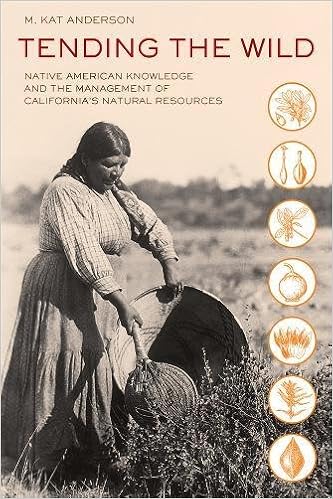
Kat Anderson's, Tending The Wild is the definitive text on Native American land management in California.
----------------------------------------------

KCET: Cultural Burning, Episode 1


----------------------------------------

Menominee Forest Keepers


"For more than 150 years, the Menominee have pioneered forestry practices that have preserved an ecosystem with numerous species and varied habitats. The result is a forest that is not only economically profitable, but also ecologically healthy.

The Menominee practice a sustained-yield approach to forestry; that is, they manage the forest to ensure that trees are harvested in amounts that will ensure a steady supply of timber far into the future. The Menominee approach is unique, blending modern forestry science with traditional beliefs embedded deep in their culture."

More info.


------------------------------------------

Forests Are Human Artifacts


"Like people everywhere, Indians survived by cleverly exploiting their environment. Europeans tended to manage land by breaking it into fragments for farmers and herders. Indians often worked on such a grand scale that the scope of their ambition can be hard to grasp. They created small plots, as Europeans did...but they also reshaped entire landscapes to suit their purposes. A principal tool was fire, used to keep down underbrush and create the open, grassy conditions favorable for game. Rather than domesticating animals for meat, Indians retooled whole ecosystems to grow bumper crops of elk, deer, and bison."

..."what the eco-imagery would like to picture as a pristine, untouched Urwelt [primeval world] in fact has been managed by people for millennia...[forests] are among the finest works of art on the planet."

"The Indians were the 'keystone species' of the American ecosystem...After disease killed off the Indians...buffalo vastly extended their range. Their numbers more than sextupled. The same occurred with elk and mule deer."

-----------------------------------------

Collapse of Native American populations changed the global climate by allowing forests to expand
When Europeans arrived in the Americas, they caused so much death and disease that it changed the global climate, a new study finds.

European settlers killed 56 million indigenous people over about 100 years in South, Central and North America, causing large swaths of farmland to be abandoned and reforested, researchers at University College London, or UCL, estimate. The increase in trees and vegetation across an area the size of France resulted in a massive decrease in carbon dioxide (CO2) in the atmosphere, according to the study. 
Carbon levels changed enough to cool the Earth by 1610, researchers found. Columbus arrived in 1492. "CO2 and climate had been relatively stable until this point," said UCL Geography Professor Mark Maslin, one of the study's co-authors. "So, this is the first major change we see in the Earth's greenhouse gases."
Before this study, some scientists had argued the temperature change in the 1600s, called the Little Ice Age, was caused only by natural forces.
But by combining archaeological evidence, historical data and analysis of carbon found in Antarctic ice, the UCL researchers showed how the reforestation -- directly caused by the Europeans' arrival -- was a key component of the global chill, they said.
"For once, we've been able to balance all the boxes and realize that the only way the Little Ice Age was so intense is ... because of the genocide of millions of people," Maslin told CNN.
---------------------------------------

"Fire is Medicine": the Tribes Burning California Forests to Save Them

For millennia, native people have used flames to protect the land. The US government outlawed the process for a century before recognizing its value.

Saturday, April 14, 2018

SFP Videos and 1-sheet

We've been chipping away at a series of 6 short videos explaining the Sagehen Forest Project evolution. Watch them below--just one left to finish!


We're also headed off to Washington DC next week for Congressional Visits Day, so we produced a 1-sheet (2-sides) explaining Sagehen and the Sagehen Forest Project very succinctly:


Saturday, November 4, 2017

We're expanding!

The Sagehen Forest Project is growing. The techniques and strategies we developed are being applied at larger scales in California. We are involved in several new initiatives, profiled in previous posts: Lake Tahoe West, Tahoe Central Sierra Initiative, Living Forests. 

We continue our outreach efforts. In September, Sagehen hosted 35 insurance industry executives to talk about what they should know about forest management, and how they can help. We are planning our next state and federal legislative training session for 2018. This fall we attended Burning Man as a guest of one of the founders in order to explore how Black Rock City's unconventional thinkers can help. We are meeting with this year's Temple architect and other artists about dead trees, forest health, and how their projects can connect people to forest issues.

Full implementation will take up to 3 more years to get burn windows, but you may want to start following some or all of these other efforts.

Friday, November 3, 2017

End days!

Preserving the big, fire-resistant 
Jeffrey pine trees; removing a 
lot of torchy White Fir.
Finally, we are reaching the final stages of implementation of the Sagehen Forest Project and other forestry projects in the basin plantations: logging and fire!

The hand-thinning and mastication units in the Sagehen Forest Project were completed in 2016. We tried to start burning the piles last fall, but they were still too green. All summer long, firewood cutters have been removing the logs from the piles for us (including volunteers from Northstar's Epic Promise Day), and the remaining slash is now dry and ready to burn as soon as snow comes to prevent the fires from taking off. The burn piles have a small bit of plastic sheet in them to keep the core of the pile dry enough to light after the ground gets too wet to burn.

Bamford, the contractor for the units with saw logs on them, finally executed his contract at the eleventh hour: it was awarded 6 years ago. The scary Transformer-like machines started processing logs about a week ago, and they will work until weather makes the ground too wet to continue. They'll return next season to finish. It's an impressive operation.

But, forest restoration projects are not complete until low-intensity ground fire returns to cycle nutrients and take over the task of thinning the forest before it burns catastrophically. Cool fire also removes duff layers that impede water infiltration, letting it run off and escape rather than replenish the groundwater.

That guy looks so unsafe!


This week, the Forest Service finally put fire into the plantations that they masticated in 2014. It takes a long time for all the stars to line up: air quality, fuel moisture, no wind, a storm on the way to put the fire out afterwards, fire crews in position, funding. It's amazing it ever gets done at all. Hopefully, public resistance to light smoke from prescribed fires is being overcome by the overwhelming smoke from catastrophic burns.

In the long run, this stuff is going to burn. As Craig Thomas of Sierra Forest Legacy says, "There is no 'no fire' option for California." We need to decide whether we want to work with fire, or continue to be its victim. "With fire, we've been trying to completely suppress a process that is as natural as rain...and it's not working out well for us. The next generation is going to pay our air emissions debt."

Feller-buncher head
Sagehen is working with the Living Forests project to try to build a small wood timber industry to keep some of the wood out of the flames, or at least burn it in a controlled furnace to make heat and energy.

Sagehen Forest Project photos (more recent photos are later in the album).

Of course, none of this would be possible without all of our wonderful partners in the Sagehen Forest Project including our funders at the Sierra Nevada Conservancy, National Forest Foundation, US Forest Service, Tahoe National Forest, Wildlife Conservation Board, Joint Fire Science Program, UC Berkeley, and others. Heartfelt thanks!

Monday, October 16, 2017

Sierra to California All-Lands Enhancement (SCALE) Project


SCALE is another group working on small wood utilization strategies. You can read their June newsletter here.

Tahoe-Central Sierra Initiative

"The Tahoe-Central Sierra Initiative (TCSI), a part of the Sierra Nevada Watershed Improvement Program (WIP), brings together innovative approaches to increase the pace and scale of restoration work that gets done across the watersheds of the Central Sierra Nevada and Lake Tahoe areas."
TCSI is another recent initiative that scales up some of the principles of the Sagehen Forest Project. Sagehen is actively involved in the TCSI process, which covers 4.4m-acres in central California and Nevada.

See info flyer.

Lake Tahoe West

November 30, 2016 was the inaugural meeting of the Lake Tahoe West Restoration Partnership.

Modeled on the Sagehen Forest Project's successful collaboration:
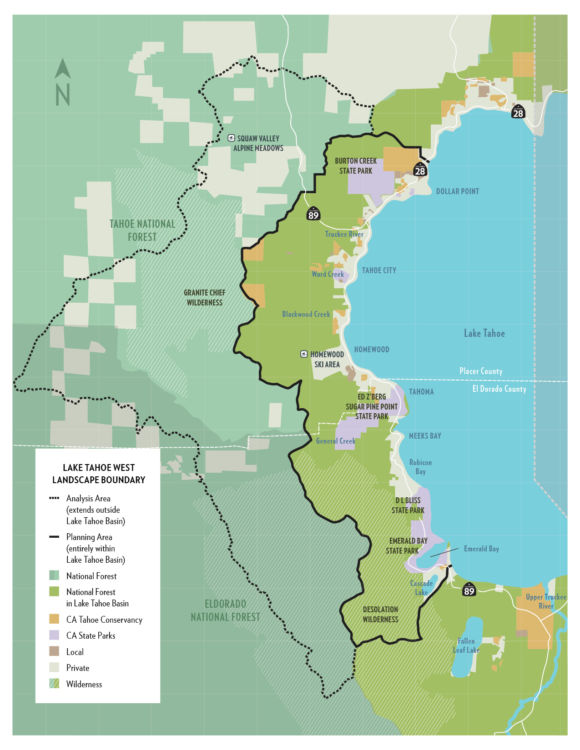
"The goal of the Lake Tahoe West Restoration Partnership (Lake Tahoe West) -- a new interagency initiative of the California Tahoe Conservancy, U.S. Forest Service Lake Tahoe Basin Management Unit, California State Parks, Tahoe Regional Planning Agency, Tahoe Fire and Fuels Team, and National Forest Foundation -- is to restore the resilience of the west shore's forests, watersheds, recreational opportunities, and communities to such threats. The planning area includes 59,013 acres of federal, state, local, and private lands, from Emerald Bay to Squaw Valley."
More info.
FTP site where you can download all current and historical stakeholder group meeting materials.

One really interesting thing about the initiative is that they funded artist Todd Gilens to participate in the process and respond to the issues. Sagehen encourages #ArtSciConverge efforts to bring larger audiences and new problem-solving strategies to the grand ecological challenges of the 21st century.

Sunday, July 10, 2016

SFP stakeholder visit

Meeting in the field on June 30, 2016 to view the current forestry work, 34 attendees representing 18 different organizations visited Sagehen to check in on the Sagehen Forest Project implementation. The group included the contractor, project funders, and members of the collaborative design process, as well as organizations and individuals involved in the upcoming Lake Tahoe west shore collaborative project:
UC Berkeley, Sagehen Creek Field Station
Truckee Ranger District, Tahoe NF, USFS
Tahoe National Forest
National Forest Foundation (NFF)
Sierra Nevada Conservancy, CA (SNC)
Wildife Conservation Board, CA (WCB)
Sierra Business Council (SBC)
Truckee Fire
Cal Fire
South Yuba River Citizens League (SYRCL)
Lake Tahoe Conservancy, CA (CTC)
Tahoe Regional Planning Agency (TRPA)
California State Parks
Lake Tahoe Basin Management Unit, USFS
Private citizens
West Forest Inc.
Pacific Southwest Research Station, USFS
USFS Region 5
While mastication is certainly traumatic, everyone seemed pleased with the overall results so far, and eager to see fire on the ground. KGO-TV--the San Francisco Bay ABC affiliate--sent a reporter, and I'll post that piece when it is released.


Friday, June 10, 2016

Harpold lab research


Adrian Harpold, Ph.D., Nevada Mountain Ecohydrology Group, University of Nevada, Reno prepared this one-sheet to explain his work at Sagehen, titled "More Water and Healthy Forests? Improved Forest Management By Integrating LiDAR Remote Sensing and Hyper-Resolution Models".

Saving The West

The Sagehen Forest Project has spun off several remarkable related projects.

Saving The West (STW), now Living Forests, is a policy document developed by the Center for the Study of the Force Majeure at UC Santa Cruz, including artist Newton Harrison and consultant Josh Harrison. STW is being developed as a rallying point to bring together a group of folks interested in addressing the glaring hole in the Sagehen Forest Project: the lack of a California market for raw wood product.


Going into the collaborative process, we all thought that getting environmentalists and loggers to agree would be the hard part. But, given a little time, that turned out to be relatively easy: everyone benefits from a healthy forest. Yet, now that we all agree on what needs to be done, we are stymied by the lack of someone to buy even the saw logs coming off the forest, much less the wood chip and small diameter wood. For the unit treatments around the station which are being funded by the National Forest Foundation (NFF) grant, we are just masticating everything into chip that will be burned on the ground. Or chopping and stacking logs into burn piles. This seems so wasteful: that material should be used, and continue to act as carbon storage.

The Center is working to put forestry issues onto the platform of the Democratic presidential nominee, as well as into the Governor's office. If these politicians start to hear about this need from both the scientists and the artists, it carries more weight and importance.

We have begun to bring Cathexis Architecture into the conversation. Cathexis has an impressive redevelopment project planned for a sizable chunk of downton Reno, NV, and they would like to build at least one wooden skyscraper. Binderholz, an Austrian company that manufactures engineered wood products, is planning to open a plant in the US. They are looking in the Pacific Northwest, but the NFF is reaching out to try to connect them with the Reno Dept. of Economic Development. If we could develop a market for wood product here, that reduces transportation costs to get material out of the forest.

The Proposal:
Related info:

Monday, May 23, 2016

Contractor agreement executed

Before...
The contract to treat the UC Berkeley-managed units around the field station has been executed! West Forest, Inc. brought their masticators out last Thursday morning, just in time for this weekend's snow, which has shut work down again until the ground dries out. Next week, we expect the hand-thinning to begin, as well.

The work done before the weather shut-down is dramatic! It's easy to see how this project will help restore ecological function: reduce stress on the big trees, reduce fire danger, and create more wildlife habitat.

See more pictures here.

...and after.

Tuesday, February 2, 2016

Public policy shifting on fire management?

The Sagehen Forest Project proposes restoring ecological function to the Sagehen Basin. It turns out that doing this tames wildfire and is good for wildlife, good for the timber industry, and good for water quality. Everyone wins.

Some recent developments suggest that forest management policy in California may be about to shift dramatically in that direction.

"The California Department of Forestry and Fire Protection (CAL FIRE) requests $180 million Greenhouse Gas Reduction Fund (GGRF) in Fiscal Year (FY) 2016-17, with position authority and associated funding in subsequent years through FY 2021-22...for a comprehensive forest health program that will further secure forest carbon and reduce greenhouse gas (GHG) emissions to meet the 2030 carbon goals within Executive Crder (EC) B-30-15. Funds will support the expansion of the Urban and Community Forestry, Forest Legacy Programs , and target landscape-scale Forest Health projects in high-priority forested upper watersheds in coordination with the Department of Fish and Wildlife, to realize the largest direct benefit for GHG reduction, forest resilience and cobenefits, such as protection of water, wildlife habitat, and rural economic stability."
2. Saving The West (now Living Forests). A policy Discussion Document from the Center for the Study of the Force Majeure, 2016.

3. Proclamation of a State of Emergency: Tree Mortality, Governor of California. December 2015.

4. Improving the Federal Response to Western Drought, Public Policy Institute of California. February 2016.

From Amy Horne:

"Just released PPIC report urges 5 reforms needed for water in California including restoring forest health and reducing fuel loads in headwaters. Also calls for FS to shift focus from fire suppression to fire prevention. The specific recommendation is:"
Initiate multiple large-scale collaborative projects to restore forest health 
There has been considerable progress in improving the pace of restoration of forested lands nationwide (US Forest Service 2015). Yet many interviewees felt that to date, most efforts at fire prevention and forest health have been small-scale demonstration projects. To improve public perception and demonstrate benefits—including the potential for boosting drought resilience for downstream users—the Forest Service needs to incorporate a series of large-scale projects into all of the emerging forest management plans. These projects should explore incentives for financial investments from beneficiaries to cover a portion of the costs.32 In addition, partnerships should be formed to promote research and development of new wood energy and building industry products that can increase the value of harvests that reduce fuel loads.

Wednesday, August 5, 2015

Sagehen Forest Project summary

There is lots of good information about the Sagehen Forest Project on this blog. But it can be tricky to find a succinct explanation, so I've written a synopsis (below). Printable version here.

Be sure to see the Purpose and Needs statement for a more complete and detailed discussion of the project genesis.

================

The Sagehen Forest Project

The northern Sierra Nevada was largely denuded of timber during the Comstock silver strike in Virginia City, the construction of the transcontinental railroad, and the post WWII construction boom. The forest that re-grew was optimized for timber harvest, and now shows limited diversity of tree species, size and age class, as well as a massive accumulation of fuel due to a century of aggressive fire suppression.

Dense "dog-hair" stand of Lodgpole pine.
These stands choke off resources for large
trees and constitute a big fire danger.
This is not a healthy structure for a forest nor for the things that live in the forest: large fuel loads along with high susceptibility to drought, insect infestation and disease result in devastatingly hot and destructive wild fires and declining wildlife habitat quality. Unfortunately, much of the forested western US suffers from the same conditions. Due to a warming, drying climate since their establishment after the last ice age, forests cannot always recover or reestablish after these disruptive events.

At this point in time, the forests need active manipulation to return them to a more natural, resilient, fire-tolerant structure, but this is too expensive to do everywhere. A strategy for treating a smaller portion of the forest that yields similar benefits was proposed and adopted by the Forest Service in the early 2000’s. The strategy was called SPLATs, Strategically Placed Land Area Treatments. The idea involves thinning and removing fuel from roughly 30% of forested areas in a waffle-like pattern. This approach shifts the choice of treatment zones from smaller, more targeted and logistically or politically motivated areas, to a broader “landscape” management perspective.

A large, ecologically-valuable Jeffrey pine, released by
thinning treatment at Sagehen.
But SPLATs had never been tested on a real forest, nor in areas with topographic relief. In partnership with the Forest Service, Berkeley professors Scott Stephens and John Battles decided to implement the strategy at Sagehen. They funded a Ph.D. student and a massive data collection effort. Creating what is one of the best data sets of its kind, the study sampled the entire basin for vegetation and fuels, including a grid of permanent 500-m2 plots where every tree is tagged and measured, canopy closure determined, and ground fuels classified. LiDAR laser mapping created high-resolution topographic maps at 1-m resolution, for both vegetated and bare-earth surfaces. A rare eastern Sierra fire history dating back to the 1600’s was drawn from live trees and Comstock-era stumps.

Existing remote sensing and fire models were enhanced with this data and new predictive tools created. In this process, it became obvious that while these treatments would definitely disrupt fire behavior, their implementation would potentially impact wildlife, water quality and other forest products. To fill in the missing pieces, the Forest Service’s Pacific Southwest Research Station (PSW) put together an interdisciplinary team to come up with a guiding document: a science synthesis on the broader natural ecology of Sierra east-slope pine forests. The result, General Technical Report (GTR) 220, provided a big picture view of the issue and how to structure forests that are not just fire-resistant, but also topographically diverse, wildlife friendly and responsive to today’s--and tomorrow’s--altered climate conditions.

With this tool in hand, Sagehen worked with the Forest Service to create a collaborative process to decide what to do in the basin forest, where, and how to do it. We invited everyone who might be interested: loggers, environmentalists, agency staff, academics, NGOs, interested citizens. And they came. We hired a facilitator. We created a public outreach blog and posted every document the group created. We treated two demo plots so everyone could see the ideas on the ground rather than just in the abstract. The group spent the last year and a half hammering out a solution that everyone could live with.

And, amazingly, everyone was able to agree. The project was approved without litigation at any stage. Official letters of support came from both the loggers and the environmentalists.

Additionally, the National Forest Foundation has jumped on board, adopting the Truckee River watershed for their “Treasured Landscapes” initiative, and promoting the Sagehen Forest Project as the best way to address forest restoration efforts in the area.

This project potentially offers other forests a way around the logjam of litigation and contentiousness that has shut down many timber management projects proposed on public lands in the western US in recent years. As such, the Lake Tahoe Basin Management Unit has adopted the strategy and worked hard to shift their employees toward this new paradigm. Their public collaboration began in fall 2016 and includes Sagehen. A large forest management project at the Truckee-Airport Board’s Waddle Ranch is also modeled after the Sagehen Forest Project.

The Sagehen Forest Project is creating momentum to revisit past basin research and answer larger questions than this science originally addressed. In addition to resampling the vast forest structure inventory, and in anticipation of the coming changes to the landscape, hydrology and soils data collection expanded this year. And researchers actively re-sampled historic small mammal trapping transects, fish and bird surveys, and pine marten monitoring dating back to the 1960’s. Protected Activity Centers (PACs) set aside for species of concern like Northern Goshawks and California Spotted Owls are being watched carefully to see if the animals really do prefer the current conditions, or if they will move when different local habitat becomes available.

Everyone is happy. We thought we were done. We began implementing the prescription at Sagehen. But it turns out that the timber industry in California is basically gone. There is very little mill capacity left and what there is, is now unavailable. As a culture, we made a huge misstep that seemed like a good idea at the time: we decided to give away the standing dead timber from catastrophic fire and beetle kill. This dead wood is now plugging up the available capacity: why buy green timber when you can get an unlimited supply of black timber for free? With no market for the wood coming out of the forest, there is no money to fund removing it.

Our culture has essentially decided to sacrifice the living in order to scavenge the dead. And it turns out that there is no valid reason to do this: ecosystem health values that standing dead, and once the needles fall off the beetle kill there is little fire danger left. In fact, removing just the logs from a forest (and leaving the brush, small trees, limbs, needles, bark, etc. as in traditional forestry) only reduces fire risk by 3 or 4%.

What we need now is a new timber industry, one that uses small diameter trees and slash to produce not just conventional timber, but new wood products like engineered timber, cross-laminated timber (CLT), oriented strand board (OSB), torrefied pellets, soil enhancements, bio-energy, and even hydrocarbon feedstock for plastics. A distributed forestry industry creates local jobs. Developing a viable small timber industry as a byproduct of forest health treatments has additional benefits, replacing steel, petroleum and concrete in multi-story structures that are more fire-resistant and seismic safe, while sinking massive amounts of carbon that will otherwise eventually burn up in the forest.

We are actively working with Congress and powerful artists to promote this plan to larger audiences. Here are some links to more info.


Thursday, July 30, 2015

Washington DC visit

 Jeff and I were just in Washington, DC with the Organization of Biological Field Stations (OBFS) to share information about field stations with Congressional staffers. One of the topics Jeff and I spent a lot of time discussing with our state reps is the Sagehen Forest Project.

One big issue is how project implementation is being held up by the lack of a market for our logs, since there is so much black timber from recent fires.
As a society, we are unintentionally sacrificing the living in order to scavenge the dead. Not good!
We'll be continuing the conversation at a briefing during the Tahoe Summit.