Showing posts with label fire. Show all posts

Wednesday, August 6, 2025

Unintended Consequences in Western Forests

Western US forests are in ecological collapse. Wildfire is sweeping through at unprecedented scale and intensity while native bark beetles destroy entire stands. Climate change is only making things worse. The good news is that the problem was largely created by our short-sighted management policies, so we can fix it. But we need to act soon, and at scale, to preserve our forests and our water supply.

Comstock-era firewood--cut by Abner Weed in
the late 1880’s for the Virginia City silver
mines and the logging locomotives--still sitting
in the Sagehen forest waiting for a spark, 130
years later.

Dead wood in dry western forests is essentially
immortal: that includes large-tree logging debris.
We need small fires to cycle nutrients, not big
fire that kills everything and starts the
dysfunction-clock all over again.

But first, we need to thin the forest of overgrown
small trees and woody debris, so that small fires
don't turn into big ones.

Traditional logging doesn't do that, so we need a
new kind of timber industry that does.
Imagine sincerely trying to prevent rain from landing anywhere on a forested landscape. This would be an insane proposition.

Now think about fire. Low intensity fire is as natural to western US forests as rain, yet for most of the past 100 years, we have done everything in our power to exclude even small fires from these landscapes. We are now reaping the consequences of that folly, with accumulated fuel loads and warming, drying weather feeding catastrophic firestorms that destroy entire stands, and even city neighborhoods. California alone spends over $1.5 billion annually on fire control to protect 15 million fire-endangered acres. In 2017 over 1,000,000-acres burned in California, with direct and indirect fire suppression costs exceeding $13 billion. Who planned that?

Obviously, no one intended for us to arrive at this crisis but now that we have, there is a lot of finger pointing and digging in of heels going on. Environmentalists point at loggers, and loggers at environmentalists, but both sides have some hard lessons they need to hear and take to heart if we are to find a way through this crisis, and back to healthy, productive forests and forestry again. 50 years of vitriol and litigation proves one thing: you can’t change someone’s values by arguing with them or by steam-rolling them. Winner-Takes-All is a horrible model for managing shared resources like forests. We need to find a new, better way…and we have.

...

[CONT.]

WHAT CAN YOU DO TO HELP?
  • Learn more. Be an informed citizen, not an unwitting pawn:
    New Yorker article | livingforests.org | sagehenforest.blogspot.com
    Watch our webisodes explaining the fire problem and the Sagehen Forest Project at tinyurl.com/y8ho2ckx
  • Contact your elected representatives 
    • Let them know there’s a better solution out there than a) just turning the traditional timber industry loose in our damaged forests to reset the dysfunction clock again, or b) ignoring the problem in the naive belief that Mother Nature will somehow deal with it: she is, and this is what it looks like. 
    • Ask them to support the Sagehen Forest Project prescription, and changes to building codes to allow engineered wood buildings. 
    • Resist “salvage logging” of dead trees: these trees are not a serious fire problem, and this activity reduces our capacity to do what needs to be done to save our remaining living forests.
  • Request local wood, and buy it where available! If retailers keep hearing this demand, they will force the industry to respond.
  • Use (hopefully local) biochar in your garden to improve your soil, and bank wood carbon for thousands of years. sagehenforest.blogspot.com/2018/04/biochar.html
  • Have other ideas? Get in touch! sagehen.ucnrs.org/faculty-staff/ 
  • Artists: sagehen-art.blogspot.com
  • We need financial support, too. Donate safely via the orange "Give Now" button at the top of our homepage at sagehen.ucnrs.org

Monday, January 1, 2024

Future Forests partnership

 Sagehen is working hard to scale up the kind of forest treatments needed to return low intensity fire and restore health and resilience to our precious central Sierra forests.

But we can't move forward--and could never have gotten anywhere in the first place--without a broad and increasing range of excellent partners. We need a fundamental shift in our cultural relationship to fire and forestry, and to get there will involve 5 prongs: Art, Business, Policy, Management, and Science. In particular, art is how you change culture, so we need an artistic response at the scale of the management response.

Joining with the Nevada County Arts Council, Arts & Culture Eldorado, the Nevada Museum of Art - Center for Art + Environment and many socially-engaged artists and other supporters, we have initiated an effort called Future Forests. See the website to learn more about us, see what's already happening, and to get involved if our work meshes with yours. We always need more partners!

Listen to Jeff describe the pieces of the puzzle on WeatherBrains 724 (watch from 38:05-44:09):


Friday, February 21, 2020

Friday, December 6, 2019

Thursday, May 16, 2019

Fire footprint timelapse

Google Earth has produced a timelapse of bush fires in Australia that is illuminating.

The animation shows fire scars appear, fade and be overwritten by a new fire. Though fire size seems to be increasing in Australia, this process creates patchiness and resiliency in Sierra Forests, But it takes place over the hundreds of years cycle of forest tree growth, rather than the few years of brush and grasslands, so it's harder to see.

Friday, May 3, 2019

California's fire situation explained

Yosemite Valley in 1899 and 2011.

This is an excellent background piece from the NYT. It cuts through the fantasy spin of the timber industry and the extremist environmentalist wing, stating what the majority of loggers and environmentalists already agree on.

The piece cites the true leading experts in California fire history and forest ecology: Malcolm North, Stephen Pyne, Scott Stephens, Greg Asner, the Little Hoover Commission.

See also, this 2019 New Yorker article on the Sagehen Forest Project.

Friday, October 19, 2018

Traditional Forest Management

TED talk on Forest Management


As Paul says in the video, Native Americans managed the landscape with fire for thousands of years--in fact, the forests wouldn't exist without this legacy of fire.

Native American Forest Management

In California


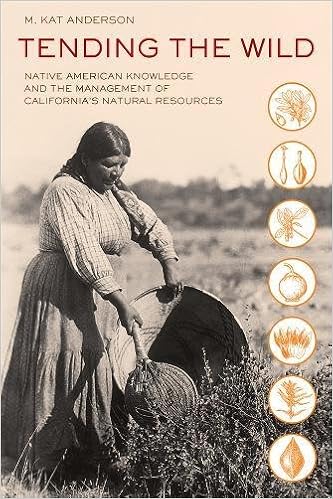
Kat Anderson's, Tending The Wild is the definitive text on Native American land management in California.
----------------------------------------------

KCET: Cultural Burning, Episode 1


----------------------------------------

Menominee Forest Keepers


"For more than 150 years, the Menominee have pioneered forestry practices that have preserved an ecosystem with numerous species and varied habitats. The result is a forest that is not only economically profitable, but also ecologically healthy.

The Menominee practice a sustained-yield approach to forestry; that is, they manage the forest to ensure that trees are harvested in amounts that will ensure a steady supply of timber far into the future. The Menominee approach is unique, blending modern forestry science with traditional beliefs embedded deep in their culture."

More info.


------------------------------------------

Forests Are Human Artifacts


"Like people everywhere, Indians survived by cleverly exploiting their environment. Europeans tended to manage land by breaking it into fragments for farmers and herders. Indians often worked on such a grand scale that the scope of their ambition can be hard to grasp. They created small plots, as Europeans did...but they also reshaped entire landscapes to suit their purposes. A principal tool was fire, used to keep down underbrush and create the open, grassy conditions favorable for game. Rather than domesticating animals for meat, Indians retooled whole ecosystems to grow bumper crops of elk, deer, and bison."

..."what the eco-imagery would like to picture as a pristine, untouched Urwelt [primeval world] in fact has been managed by people for millennia...[forests] are among the finest works of art on the planet."

"The Indians were the 'keystone species' of the American ecosystem...After disease killed off the Indians...buffalo vastly extended their range. Their numbers more than sextupled. The same occurred with elk and mule deer."

-----------------------------------------

Collapse of Native American populations changed the global climate by allowing forests to expand
When Europeans arrived in the Americas, they caused so much death and disease that it changed the global climate, a new study finds.

European settlers killed 56 million indigenous people over about 100 years in South, Central and North America, causing large swaths of farmland to be abandoned and reforested, researchers at University College London, or UCL, estimate. The increase in trees and vegetation across an area the size of France resulted in a massive decrease in carbon dioxide (CO2) in the atmosphere, according to the study. 
Carbon levels changed enough to cool the Earth by 1610, researchers found. Columbus arrived in 1492. "CO2 and climate had been relatively stable until this point," said UCL Geography Professor Mark Maslin, one of the study's co-authors. "So, this is the first major change we see in the Earth's greenhouse gases."
Before this study, some scientists had argued the temperature change in the 1600s, called the Little Ice Age, was caused only by natural forces.
But by combining archaeological evidence, historical data and analysis of carbon found in Antarctic ice, the UCL researchers showed how the reforestation -- directly caused by the Europeans' arrival -- was a key component of the global chill, they said.
"For once, we've been able to balance all the boxes and realize that the only way the Little Ice Age was so intense is ... because of the genocide of millions of people," Maslin told CNN.
---------------------------------------

"Fire is Medicine": the Tribes Burning California Forests to Save Them

For millennia, native people have used flames to protect the land. The US government outlawed the process for a century before recognizing its value.

Monday, July 30, 2018

Black-backed woodpeckers need small fires, not large ones

Scott Crosbie bands a BBWO at Sagehen in 2004.
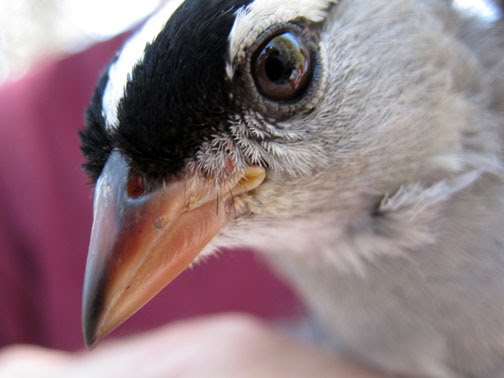
The Black-backed Woodpecker (BBWO) is a threatened bird that colonizes burned areas, and depends on standing dead snags for their nests. As such, they are a touchstone species in the debate about salvage logging of burned and beetle-killed forests. Some environmentalists (notably, Chad Hansen of the John Muir Institute) are advocating for allowing large wildfires to burn, assuming this creates more habitat for the BBWO.

Here's an interesting new paper on Black-backed Woodpeckers:
"Our expectation, grounded in island biogeographical theory (MacArthur & Wilson, 1967), was that larger fires should show increased colonization and persistence. To the contrary, sites in larger fires were less likely to be colonized..."
So much for the emerging "Just Let it Burn" argument--these fires are just too big and destructive. We need to thin first, then let regular, low intensity fire back in. And leave lots of standing dead for BBWOs and other wildlife, too, of course.

Here's a short video of a BBWO nesting near the Sagehen fishhouse in 2014. BBWOs are a regular resident at Sagehen, where they nest in standing beetle-killed trees, not burned ones. See observations of BBWOs at Sagehen on iNaturalist:

Saturday, April 14, 2018

SFP Videos and 1-sheet

We've been chipping away at a series of 6 short videos explaining the Sagehen Forest Project evolution. Watch them below--just one left to finish!


We're also headed off to Washington DC next week for Congressional Visits Day, so we produced a 1-sheet (2-sides) explaining Sagehen and the Sagehen Forest Project very succinctly:


Friday, November 3, 2017

End days!

Preserving the big, fire-resistant 
Jeffrey pine trees; removing a 
lot of torchy White Fir.
Finally, we are reaching the final stages of implementation of the Sagehen Forest Project and other forestry projects in the basin plantations: logging and fire!

The hand-thinning and mastication units in the Sagehen Forest Project were completed in 2016. We tried to start burning the piles last fall, but they were still too green. All summer long, firewood cutters have been removing the logs from the piles for us (including volunteers from Northstar's Epic Promise Day), and the remaining slash is now dry and ready to burn as soon as snow comes to prevent the fires from taking off. The burn piles have a small bit of plastic sheet in them to keep the core of the pile dry enough to light after the ground gets too wet to burn.

Bamford, the contractor for the units with saw logs on them, finally executed his contract at the eleventh hour: it was awarded 6 years ago. The scary Transformer-like machines started processing logs about a week ago, and they will work until weather makes the ground too wet to continue. They'll return next season to finish. It's an impressive operation.

But, forest restoration projects are not complete until low-intensity ground fire returns to cycle nutrients and take over the task of thinning the forest before it burns catastrophically. Cool fire also removes duff layers that impede water infiltration, letting it run off and escape rather than replenish the groundwater.

That guy looks so unsafe!


This week, the Forest Service finally put fire into the plantations that they masticated in 2014. It takes a long time for all the stars to line up: air quality, fuel moisture, no wind, a storm on the way to put the fire out afterwards, fire crews in position, funding. It's amazing it ever gets done at all. Hopefully, public resistance to light smoke from prescribed fires is being overcome by the overwhelming smoke from catastrophic burns.

In the long run, this stuff is going to burn. As Craig Thomas of Sierra Forest Legacy says, "There is no 'no fire' option for California." We need to decide whether we want to work with fire, or continue to be its victim. "With fire, we've been trying to completely suppress a process that is as natural as rain...and it's not working out well for us. The next generation is going to pay our air emissions debt."

Feller-buncher head
Sagehen is working with the Living Forests project to try to build a small wood timber industry to keep some of the wood out of the flames, or at least burn it in a controlled furnace to make heat and energy.

Sagehen Forest Project photos (more recent photos are later in the album).

Of course, none of this would be possible without all of our wonderful partners in the Sagehen Forest Project including our funders at the Sierra Nevada Conservancy, National Forest Foundation, US Forest Service, Tahoe National Forest, Wildlife Conservation Board, Joint Fire Science Program, UC Berkeley, and others. Heartfelt thanks!

Friday, February 8, 2013

Associated science in the basin

As part of the Sagehen 50-year art project, we thought it would be a good idea to consolidate in one post a list of all the science projects relating to the Sagehen Forest Project.

In addition to science done to determine the best treatment options, there is a lot going on in the basin to assess pre- and post-treatment conditions going forward into the manipulation phase of the larger project.

The idea of these studies is to actually monitor and evaluate the effects of the forest restructuring on wildlife, water quality, vegetation and people. 
  • VEGETATION AND FUELS: the SPLAT project and Vaillant thesis gathered a massive dataset, including fuels and vegetation surveys, LiDAR imaging of the basin with and without vegetation, fire model runs, fire history, etc.
  • BIRDS: Researcher Marty Raphael is revisiting bird survey plots begun in the 1960's within the Donner Burn study transects. The Forest Service monitors bird presence in the basin. Goshawk and Spotted Owl surveys occur annually. The Monitoring Avian Productivity and Survivorship (MAPS) project runs annual banding stations at sites within the Sagehen basin. Vladimir Pravosudov's multi-decade chickadee memory research continues.
  • SMALL MAMMALS: Calhoun line trapping transects begun in the 1950's are being revisited by PSW researcher Pat Manley.
  • FISH SURVEYS: annual fish monitoring continues in various Sagehen Creek stretches.
  • AMERICAN MARTEN: monitoring of this indicator species was recently revisited in anticipation of the treatments.
  • HYDROLOGY: the USGS regularly samples Sagehen Creek stream water chemistry and remotely monitors flow through their Hydrologic Benchmark Network. Numerous modeling efforts continue. Terry Hogue is evaluating stream water yield. The Forest Service does annual stream condition surveys. Researcher Jim Kirchner is evaluating weather, groundwater and sap flow patterns.
  • METEOROLOGY: National Atmospheric Deposition Program precipitation sampling is ongoing. Weather data is continuously collected at 12 towers within the basin.
Did I forget anything?

Wednesday, September 19, 2012

SFP Meetings.

Jeff expounds.
Barney shares his vision.
Tuesday was back to back meetings in the lower Sagehen Forest Project demo plot.

First was a meet-and-greet with our PSW liaison Rick Bottoms, Truckee District Ranger Joanne Roubique, and the new Deputy Regional Forester, Barney Gyant. It was great to meet and get a chance to catch Barney up on Sagehen plans and projects. We're definitely on the same page and we look forward to working with him in the future!

Next on the agenda was a tour of the lower Sagehen Forest project demo plot with Joanne and her Vegetation Management Officer, Scott Conway; the National Forest Foundation's California Program Director, Vance Russell; and the Lake Tahoe Basin Management Unit's Deputy Forest Supervisor Jeff Marsolais and Vegetation Management Officer, Rita Mustatia.

The meetings overlap!
Discussion of the treatment strategy and the process.
Scott, Joanne and Jeff discussed the treatment design and the collaborative process behind the Sagehen Forest Project. Jeff and Rita talked about the challenges in the Lake Tahoe basin, some of their plans for fire mitigation and forest health, and how the SFP might fit into those plans.

We're very excited about the wider scope possibilities of the SFP!

More photos.


Saturday, October 16, 2010

Plot 10 Prescribed Burn on 10/15/2010

The fuels came into condition quickly, so the Forest Service was able to burn plot 10 yesterday. Jeff & I went up to take a look.

Thursday, October 7, 2010

Truckee Talks segment


The Sagehen Forest Project from F. Felix on Vimeo.
Jeff Brown, Malcolm North & Scott Conway talk to Maia Schneider about the Sagehen Forest Project underway in the Sagehen Experimental Forest.

More information on the project blog at http://sagehenforest.blogspot.com/

Thursday, June 10, 2010

GTR-220 implementation discussion

Today, a group of foresters & ecologists led by Malcolm North met to begin discussions on how to write a treatment prescription based on the broadly supported GTR-220 document describing how to restore resiliency to Sierran forests.

As an example of efforts currently underway to implement these guidelines, Eric Knapp discussed work being done on the Stanislaus-Tuolumne Experimental Forest, using detailed forest maps from 1929 & research by Richy J. Harrod, Bradner H. McRae, William E. Hartl: Historic stand reconstruction in ponderosa pine forests to guide silvicultural prescriptions.

Ramiro Rojas of the Sierra National Forest also discussed marking prescriptions for the Dinkey Proposed Actions, a project that has significant fisher habitat considerations.

The rest of the day was spent in the field.

Saturday, June 5, 2010

Interview with Gary Roller & Jeff Brown about SPLATs research at Sagehen.

10-25-2006: Here's an old TTCTV broadcast of Maia Schneider interviewing Gary Roller & Jeff Brown about SPLATs research at Sagehen.

There's good background here about the unprecedented data set collected for the project: fuels & vegetation surveys, LiDAR imaging of the basin, fire model runs, etc.


Gary Roller & Jeff Brown discuss SPLATs research. from F. Felix on Vimeo.

Friday, May 14, 2010

Sagehen Forest Project Collaboration Exploration Meeting: 5-12-10

On Wednesday, May 12, 2010, a group of interested stakeholders met to talk about the possibility of collaborating on forest health treatments for the Sagehen basin.

Download the meeting notes, including a list of participants.

In this introductory meeting, the Tahoe National Forest, Pacific Southwest Research Station & UC Berkeley Sagehen Creek Field Station shared the work they've done to date to define the problem & the likely areas to be affected. Scott Conway, Scott Dailey & Kris Boatner presented for the Forest Service, Jeff Brown for Sagehen Creek Field Station. The panel discussion included Tom Quinn, Forest Supervisor; Joanne Roubique, District Ranger; Peter Stine, PSW; Bill Zielinsky, PSW; & others.

After the presentations at the Tahoe Forest office, the group visited Sagehen for a field trip to examine some of the issues, somewhat constrained by snowy roads.

Later meetings will focus discussion on what actual treatments [or not] will be best for each area. The next meeting date is currently being worked out on Doodle.

*****

The PowerPoint presentations from the meeting are available for download here [105 MB].

Or watch movies made from the PowerPoints here.

Jeff Brown's introduction to Sagehen slideshow:


50+ Years of Sagehen from F. Felix on Vimeo.
07:00