Friday, August 21, 2020

It's finally happening!


After all these years, we may have actually slain this dragon: congratulations everyone!


Office of the Governor

FOR IMMEDIATE RELEASE: Contact: Governor's Press Office
Thursday, August 13, 2020 (916) 445-4571

California, U.S. Forest Service Establish Shared Long-Term Strategy to Manage Forests and Rangelands

Agreement will improve coordination to reduce wildfire risks on federal and state lands


Funding included in the federal Great American Outdoors Act


Agreement comes as Lake Fire burns in Angeles National Forest


SACRAMENTO -- In a key step to improve stewardship of California’s forests, the Newsom Administration and the U.S. Forest Service today announced a new joint state-federal initiative to reduce wildfire risks, restore watersheds, protect habitat and biological diversity, and help the state meet its climate objectives.


The Agreement for Shared Stewardship of California’s Forest and Rangelands includes a commitment by the federal government to match California’s goal of reducing wildfire risks on 500,000 acres of forest land per year. To protect public safety and ecology, experts agree that at least one million acres of California forest and wildlands must be treated annually across jurisdictions.


A historical transition toward unnaturally dense forests, a century of fire suppression and climate change resulting in warmer, hotter and drier conditions have left the majority of California’s forestland highly vulnerable to catastrophic wildfire and in need of active, science-based management. Since the federal government owns nearly 58 percent of California’s 33 million acres of forestlands, while the state owns 3 percent, joint state-federal management is crucial to California’s overall forest health and wildfire resilience. 


Improved coordination also is key since nearly half of the state dollars invested in fuels management in recent years was spent on federal land.  


“Wildfires don’t stop at jurisdictional boundaries. As we respond to wildfires in real-time this summer, improving coordination between the major stewards of California’s forested land will help us protect communities and restore forest health across California,” Governor Gavin Newsom said. “We are grateful to secure the U.S. Forest Service’s commitment to help us more effectively address the scale of California’s current wildfire crisis.”


“Collaboration between state and federal agencies on issues of forest health and resiliency is critical,” said U.S. Forest Service Chief Vicki Christiansen. “The Forest Service is fortunate to collaborate on restoration projects across the state and share science and research to address issues to help care for the land and serve people. We are excited to expand our partnership with California to enhance our collaboration though this Shared Stewardship agreement with California.”


The Shared Stewardship Agreement builds on existing coordination between state and federal agencies, and outlines six core principles and nine specific actions that will drive improved state-federal collaboration:


  • Prioritize public safety;
  • Use science to guide forest management;
  • Coordinate land management across jurisdictions;
  • Increase the scale and pace of forest management projects;
  • Remove barriers that slow project approvals; and
  • Work closely with all stakeholders, including tribal communities, environmental groups, academia and timber companies.


Specifically, through this agreement California and the U.S. Forest Service commit to execute the following activities together:


  • Treat one million acres of forest and wildland annually to reduce risk of catastrophic wildfire (building on the state’s existing 500,000-acre annual commitment);
  • Develop a shared 20-year plan for forest health and vegetation treatment that establishes and coordinates priority projects;
  • Expand use of ecologically sustainable techniques for vegetation treatments such as prescribed fire;
  • Increase pace and scale of forest management by improving ecologically sustainable timber harvest in California and grow jobs by tackling structural obstacles, such as workforce and equipment shortfalls and lack of access to capital;
  • Prioritize co-benefits of forest health such as carbon sequestration, biodiversity, healthy watersheds and stable rural economies;  
  • Recycle forest byproducts to avoid burning slash piles;
  • Improve sustainable recreation opportunities;
  • Enable resilient, fire-adapted communities; and
  • Share data and continue to invest in science.


The Great American Outdoors Act, signed by President Trump on August 4, will provide critical funding for the Forest Service’s work in California.


###

Governor Gavin Newsom
State Capitol Building
Sacramento, CA 95814

Friday, February 21, 2020

Friday, December 6, 2019

Thursday, May 16, 2019

Fire footprint timelapse

Google Earth has produced a timelapse of bush fires in Australia that is illuminating.

The animation shows fire scars appear, fade and be overwritten by a new fire. Though fire size seems to be increasing in Australia, this process creates patchiness and resiliency in Sierra Forests, But it takes place over the hundreds of years cycle of forest tree growth, rather than the few years of brush and grasslands, so it's harder to see.

Friday, May 3, 2019

California's fire situation explained

Yosemite Valley in 1899 and 2011.

This is an excellent background piece from the NYT. It cuts through the fantasy spin of the timber industry and the extremist environmentalist wing, stating what the majority of loggers and environmentalists already agree on.

The piece cites the true leading experts in California fire history and forest ecology: Malcolm North, Stephen Pyne, Scott Stephens, Greg Asner, the Little Hoover Commission.

See also, this 2019 New Yorker article on the Sagehen Forest Project.

Friday, October 19, 2018

Other Groups Working on Forest Issues

There are a lot of other groups working on California forest issues like we are. Here's a growing list:

New Products from Small-Diameter Wood

CLT and biochar are interesting enough, but there are some crazy new wood products out there, too...

Plastic Packaging from Wood

"Microfibrillated cellulose (MFC) consists of plant fibres that are only 100 nanometres in diameter, but can be extremely long, making them highly suitable as a reinforcement material for biodegradable plastics.

MFC membranes have also been shown to be impermeable to gases such as oxygen and can therefore be used to protect foodstuffs.

Most of today’s plastics are petroleum-based, but scientists are now trying to create a climate-friendly alternative to plastics from renewable resources - bioplastic and (MFC)."

-------------------------------

Micro-fibrillated Cellulose cloth

This wood-based fiber is also being used for clothing.


-------------------------------

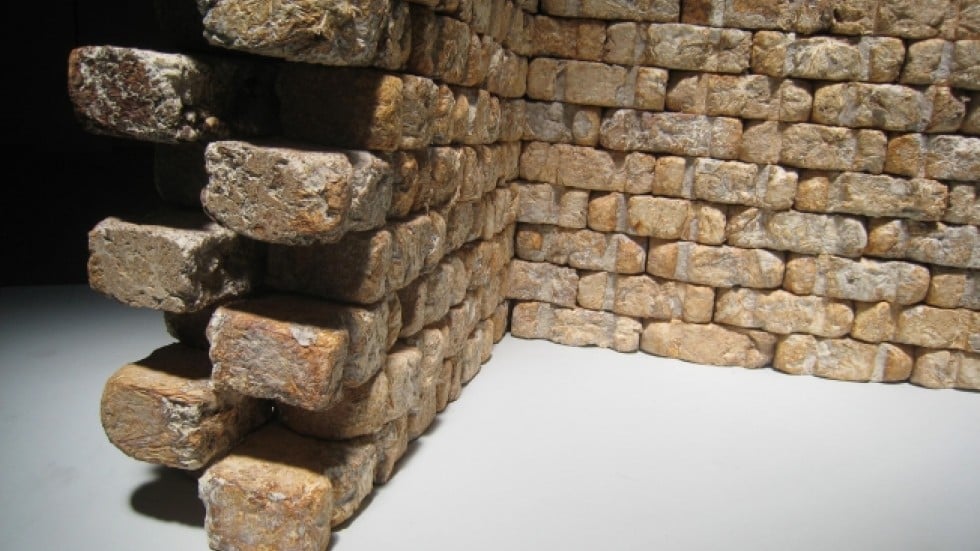
Fungus Bricks


Made from fungus and sawdust, Phil Ross' recipe makes extremely durable furniture and building materials from a forest waste product.

The company, MycoWorks, also makes leather from fungus and waste fiber.


-------------------------------

Cutting Edge Materials Science with Wood

STRONG: "Some varieties of wood, such as oak and maple, are renowned for their strength. But scientists say a simple and inexpensive new process can transform any type of wood into a material stronger than steel, and even some high-tech titanium alloys."

CLEAR: "Because MMA’s index of refraction (a measure of how much it bends light) matches that of the lignin-free wood, rays of light pass right through the MMA-infused composite instead of getting bounced around inside empty cells. This renders the [treated wood] material remarkably clear." 


-------------------------------

Carbon Fiber from Wood Precursors

Oakridge National Labs is working on reducing the cost and manufacturing time of carbon fiber, which is a magnificently strong and light material, but currently prohibitive for mass production. Their research includes a focus on less expensive precursors including wood lignin, a waste product of the paper industry.


-------------------------------

Nanocrystalline Cellulose (NCC)

"The new [paper-making] method involves breaking down wood pulp with enzymes and then fragmenting it using a mechanical beater. The shear forces produced cause the cellulose to gently disintegrate into its component fibres.

The end result is undamaged cellulose fibres suspended in water. When the water is drained away...the fibres join together into networks held by hydrogen bonds, forming flat sheets of 'nanopaper'.

Mechanical testing shows it has a tensile strength of 214 megapascals, making it stronger than cast iron (130 MPa) and almost as strong as structural steel (250 MPa).

Normal paper has a tensile strength less than 1 MPa.


The secret to the nanopaper’s performance is not only the strength of the undamaged cellulose fibres, but also they way they are arranged into networks. Although strongly bound together, they are still able to slip and slide over each other to dissipate strains and stresses."

It even conducts electricity, and can be made into strong insulting foam.

More uses for NCC.


-------------------------------

Wood Gas

Ford Model A with a wood-gas generator.
"Wood-powered vehicles have been around since the auto industry’s earliest days, but they didn’t rise to prominence until the end of the First World War. Alarmed by gas shortages during the war, many countries in Europe encouraged private companies to find a new type of fuel."


Traditional Forest Management

TED talk on Forest Management


As Paul says in the video, Native Americans managed the landscape with fire for thousands of years--in fact, the forests wouldn't exist without this legacy of fire.

Native American Forest Management

In California


Kat Anderson's, Tending The Wild is the definitive text on Native American land management in California.
----------------------------------------------

KCET: Cultural Burning, Episode 1


----------------------------------------

Menominee Forest Keepers


"For more than 150 years, the Menominee have pioneered forestry practices that have preserved an ecosystem with numerous species and varied habitats. The result is a forest that is not only economically profitable, but also ecologically healthy.

The Menominee practice a sustained-yield approach to forestry; that is, they manage the forest to ensure that trees are harvested in amounts that will ensure a steady supply of timber far into the future. The Menominee approach is unique, blending modern forestry science with traditional beliefs embedded deep in their culture."

More info.


------------------------------------------

Forests Are Human Artifacts


"Like people everywhere, Indians survived by cleverly exploiting their environment. Europeans tended to manage land by breaking it into fragments for farmers and herders. Indians often worked on such a grand scale that the scope of their ambition can be hard to grasp. They created small plots, as Europeans did...but they also reshaped entire landscapes to suit their purposes. A principal tool was fire, used to keep down underbrush and create the open, grassy conditions favorable for game. Rather than domesticating animals for meat, Indians retooled whole ecosystems to grow bumper crops of elk, deer, and bison."

..."what the eco-imagery would like to picture as a pristine, untouched Urwelt [primeval world] in fact has been managed by people for millennia...[forests] are among the finest works of art on the planet."

"The Indians were the 'keystone species' of the American ecosystem...After disease killed off the Indians...buffalo vastly extended their range. Their numbers more than sextupled. The same occurred with elk and mule deer."

-----------------------------------------

Collapse of Native American populations changed the global climate by allowing forests to expand
When Europeans arrived in the Americas, they caused so much death and disease that it changed the global climate, a new study finds.

European settlers killed 56 million indigenous people over about 100 years in South, Central and North America, causing large swaths of farmland to be abandoned and reforested, researchers at University College London, or UCL, estimate. The increase in trees and vegetation across an area the size of France resulted in a massive decrease in carbon dioxide (CO2) in the atmosphere, according to the study. 
Carbon levels changed enough to cool the Earth by 1610, researchers found. Columbus arrived in 1492. "CO2 and climate had been relatively stable until this point," said UCL Geography Professor Mark Maslin, one of the study's co-authors. "So, this is the first major change we see in the Earth's greenhouse gases."
Before this study, some scientists had argued the temperature change in the 1600s, called the Little Ice Age, was caused only by natural forces.
But by combining archaeological evidence, historical data and analysis of carbon found in Antarctic ice, the UCL researchers showed how the reforestation -- directly caused by the Europeans' arrival -- was a key component of the global chill, they said.
"For once, we've been able to balance all the boxes and realize that the only way the Little Ice Age was so intense is ... because of the genocide of millions of people," Maslin told CNN.
---------------------------------------

"Fire is Medicine": the Tribes Burning California Forests to Save Them

For millennia, native people have used flames to protect the land. The US government outlawed the process for a century before recognizing its value.

Monday, July 30, 2018

Black-backed woodpeckers need small fires, not large ones

Scott Crosbie bands a BBWO at Sagehen in 2004.
The Black-backed Woodpecker (BBWO) is a threatened bird that colonizes burned areas, and depends on standing dead snags for their nests. As such, they are a touchstone species in the debate about salvage logging of burned and beetle-killed forests. Some environmentalists (notably, Chad Hansen of the John Muir Institute) are advocating for allowing large wildfires to burn, assuming this creates more habitat for the BBWO.

Here's an interesting new paper on Black-backed Woodpeckers:
"Our expectation, grounded in island biogeographical theory (MacArthur & Wilson, 1967), was that larger fires should show increased colonization and persistence. To the contrary, sites in larger fires were less likely to be colonized..."
So much for the emerging "Just Let it Burn" argument--these fires are just too big and destructive. We need to thin first, then let regular, low intensity fire back in. And leave lots of standing dead for BBWOs and other wildlife, too, of course.

Here's a short video of a BBWO nesting near the Sagehen fishhouse in 2014. BBWOs are a regular resident at Sagehen, where they nest in standing beetle-killed trees, not burned ones. See observations of BBWOs at Sagehen on iNaturalist:

Saturday, April 28, 2018

Biochar

Biochar is going to form a part of the solution to western forest management.
"Biochar is charcoal used as a soil amendment. Biochar is a stable solid, rich in carbon, and can endure in soil for thousands of years. Like most charcoal, biochar is made from biomass via pyrolysis. Biochar...has the potential to help mitigate climate change via carbon sequestration. Independently, biochar can increase soil fertility of acidic soils (low pH soils), increase agricultural productivity, and provide protection against some foliar and soil-borne diseases."
Applied Power Labs in Oakland, CA builds portable pyrolysis machines that extract energy and heat from biomass waste. The end product of this process is biochar, and the artist-led company has a new strategy for disposing of, and distributing it. Based on the model of Community Supported Agriculture, you can now buy a biochar subscription, for your garden or someone else's. Do it!


More info.

Saturday, April 14, 2018

SFP Videos and 1-sheet

We've been chipping away at a series of 6 short videos explaining the Sagehen Forest Project evolution. Watch them below--just one left to finish!


We're also headed off to Washington DC next week for Congressional Visits Day, so we produced a 1-sheet (2-sides) explaining Sagehen and the Sagehen Forest Project very succinctly:


Saturday, November 4, 2017

We're expanding!

The Sagehen Forest Project is growing. The techniques and strategies we developed are being applied at larger scales in California. We are involved in several new initiatives, profiled in previous posts: Lake Tahoe West, Tahoe Central Sierra Initiative, Living Forests. 

We continue our outreach efforts. In September, Sagehen hosted 35 insurance industry executives to talk about what they should know about forest management, and how they can help. We are planning our next state and federal legislative training session for 2018. This fall we attended Burning Man as a guest of one of the founders in order to explore how Black Rock City's unconventional thinkers can help. We are meeting with this year's Temple architect and other artists about dead trees, forest health, and how their projects can connect people to forest issues.

Full implementation will take up to 3 more years to get burn windows, but you may want to start following some or all of these other efforts.